
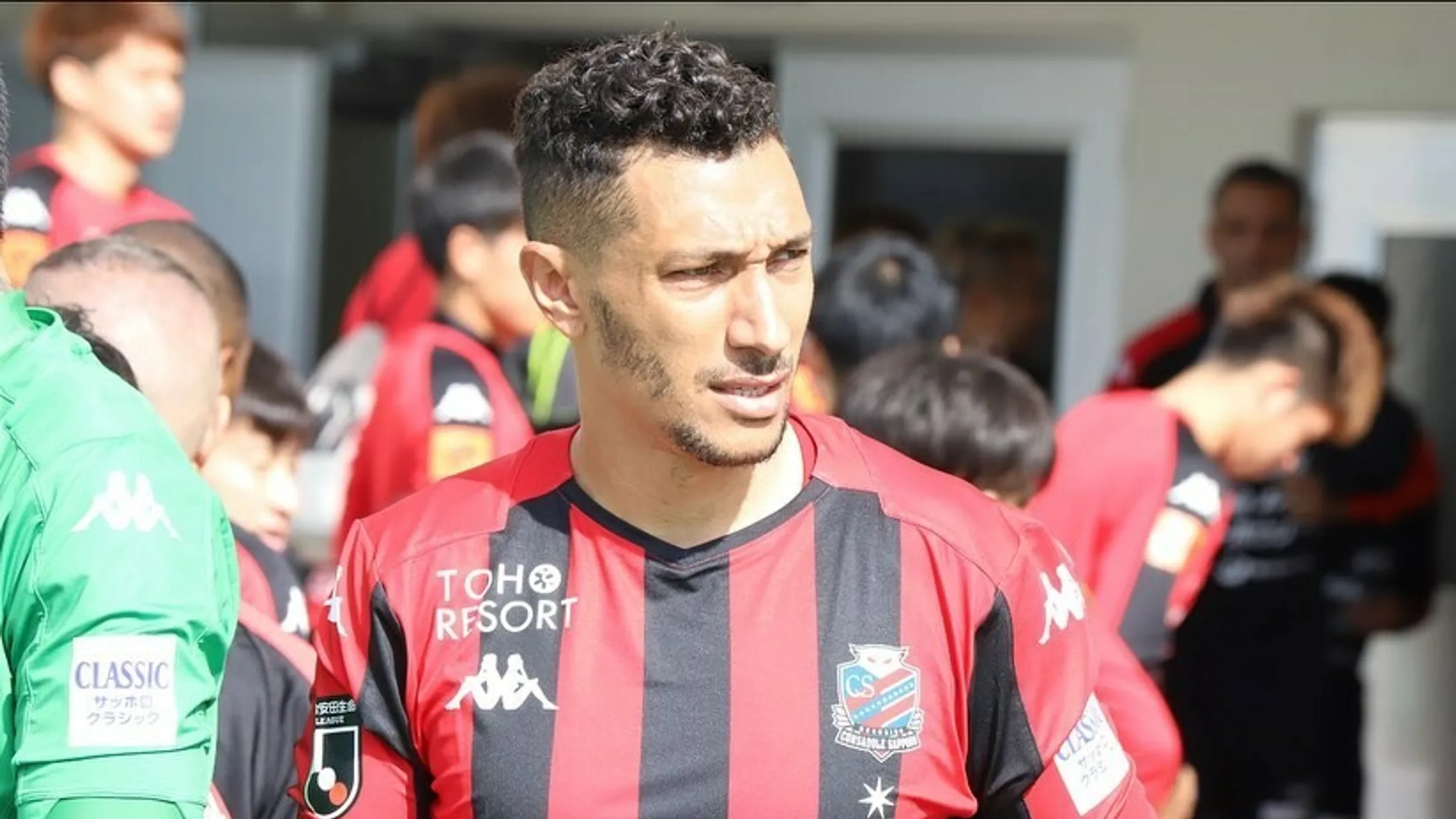
A product of Arsenal’s youth academy, the now 38-year-old spent a year in Italy with Serie A side Perugia in the early 2000s and earned his only England cap – against France – when with second-tier side Cardiff City in 2010, before joining newly promoted Queens Park Rangers in the Premier League the following year.
After two years with his hometown club – which included a loan spell at Sheffield Wednesday – the opportunity of a move to Bangkok arose. Speaking exclusively to the-AFC.com, Bothroyd reflects on five years that have seen him swap the Thai capital for Japan, joining first Jubilo Iwata and then Hokkaido Consadole Sapporo, where he continues to find the back of the net with regularity.
Asia beckons
I've always been a person that feels home is where my family is, not where I live. That's important for me. Obviously, being in London is very comfortable because I know lots of people and it's easy to live there. But I'm not scared to step out of my comfort zone. And that's the way I've always been.
When I was at QPR, we went on a pre-season trip to Malaysia. To be honest, I didn’t know much about Asia, but we got a really good response. We were mobbed at the airport and the stadiums were packed with people. I said to my teammate Djibril Cisse, “I wouldn’t mind playing in Asia for a few years”.
That was the trip that opened my eyes to Asian football.
After that I kept in contact with an agent I met there, then, after the [2012-13] season, I got the chance to go back to Asia. At the time, the manager of Muangthong (Scott Cooper) was English, so I met him in England and he sold the club to me.
I really liked the Thai people, they were so friendly and very warm. Living in Bangkok was really nice and my family enjoyed it. We had a great apartment, I made a lot of friends and Thai food is really nice. I got to travel around the country when we played away, but outside Bangkok just wasn’t me – I’m a city boy!
The fans in Thailand are fantastic. I really enjoyed so many things about life in Thailand but, to be honest, I wanted to play at a higher standard.
Joy in Japan
I was with my agent [in Japan] and we got a call around 11 o’ clock at night from the Jubilo Iwata manager, Hiroshi Nanami, who asked if I wanted to meet him at a rooftop bar on a hotel.
We went and ended up talking for about two hours. He told me he wanted to sign me and gave me a really good feeling about the club. He had also played in Italy before, and my wife’s Italian, so everything just felt right.
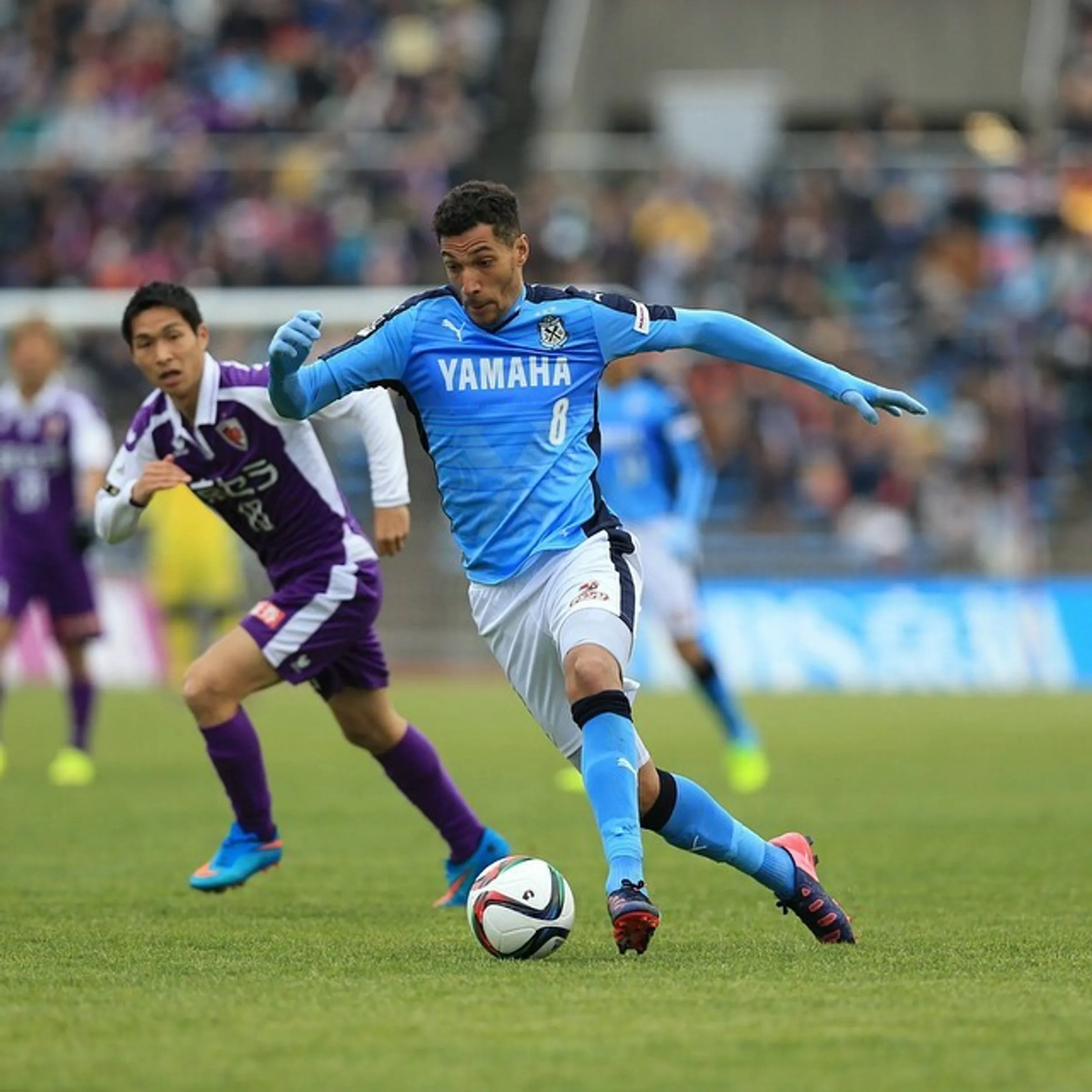
I could have gone to play for a J.League 1 side, but Jubilo had just been relegated and their ambition was to get back at the first attempt. So my thinking was to go there and show how valuable I was, get automatic promotion and make myself indispensable. That’s what happened. Even though Jubilo were in J.2, they had a big reputation in Japan.
I was living in Hamamatsu, so anytime I got a day off, my wife and I just got a bullet train to Tokyo and spent a few days there. Tokyo is amazing, a great city! It’s very much like London or New York, so we used to enjoy going there, and you get the chance to go to so many nice restaurants. Being from London, it’s the kind of city life we were used to.
Admittedly, it’s harder to adapt in Japan because you don’t know the language so you can't speak to your teammates and your manager, but they give you a translator straight away. You just have to adjust and it’s really just about getting your message across as simply as possible.
The standard was much better than in Thailand. Jubilo, Omiya Ardija, [JEF] Chiba and Kyoto Sanga were all in J.2, so there were big teams in the league at that time.
I was really happy to be there and I was playing with and against quality players. It was a good challenge for me and the team. We got promotion and I was top scorer in the league, so it was a really good campaign.
J.League bow, Jubilo departure
After playing in J.2, the step up to J.1 is not massive so you can adapt pretty easily. Both Jubilo and Omiya stayed up that year, so teams can get promotion and stay in the top league for a while.
Even Gamba Osaka went up one year and won the league the next, which shows there are a lot of quality players in Japan and that’s why I was really happy with my decision to come here.
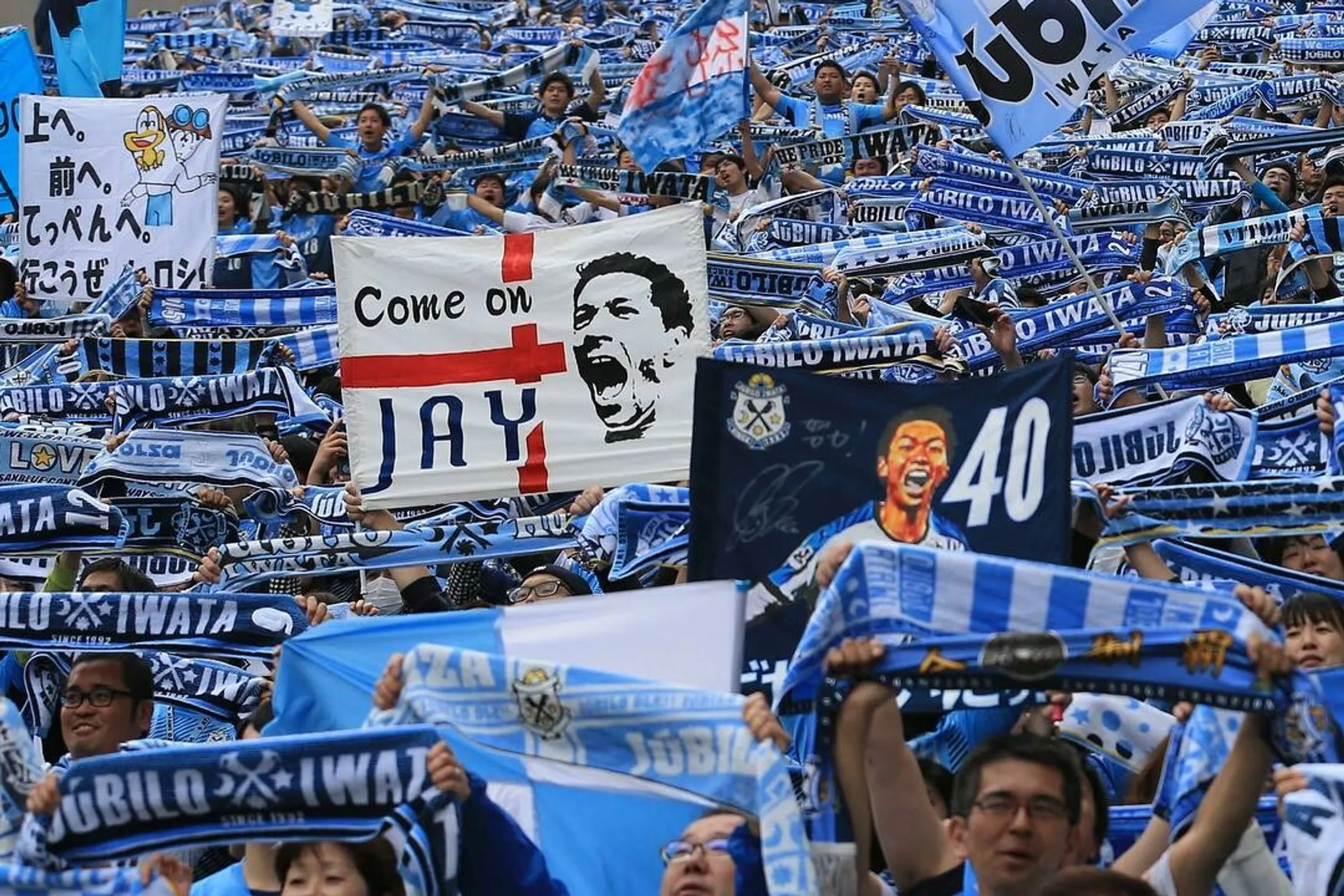
All my seasons at Jubilo were successful. Even in my second year, I scored 14 goals to keep us in the top flight. But I remember at the time, Namami used to get a little bit upset with me because European people can be much more expressive [than the Japanese], so when I got upset I might shout, or you could see the anger on my face, and Japanese people were maybe not used to that.
That counted against me a little bit and I had to learn, which I have been doing. It’s not easy to hear your whole mentality has to change overnight but I always want to be the best teammate possible, so I started working on myself more and more.
I left Jubilo, even though the players wanted me to stay, but I have always kept in contact with them because they helped with my success.
I have since spoken to Nanami a few times because he’s good friends with the Consadole president, Yoshikazu Nonomura, and everything is good between us. He even said that since I left Jubilo he has worked with other foreigners and they were much more confrontational.
I realise Japanese people don’t react well to confrontation and, as I am here in Japan, I have to change and adapt; I have had to learn that and there’s even times now when I’m still learning that.
Sapporo saviour, fourth-place agony
When I came to Sapporo [in mid-season], we were second or third bottom, but I think that I brought a winning mentality and gave my teammates belief as my passion rubbed off on them.
Out of the last 14 games, I think we won 11 and ended up finishing mid-table. I remember saying in the interview before I signed that I expected to finish mid-table and they laughed, but that’s what happened.
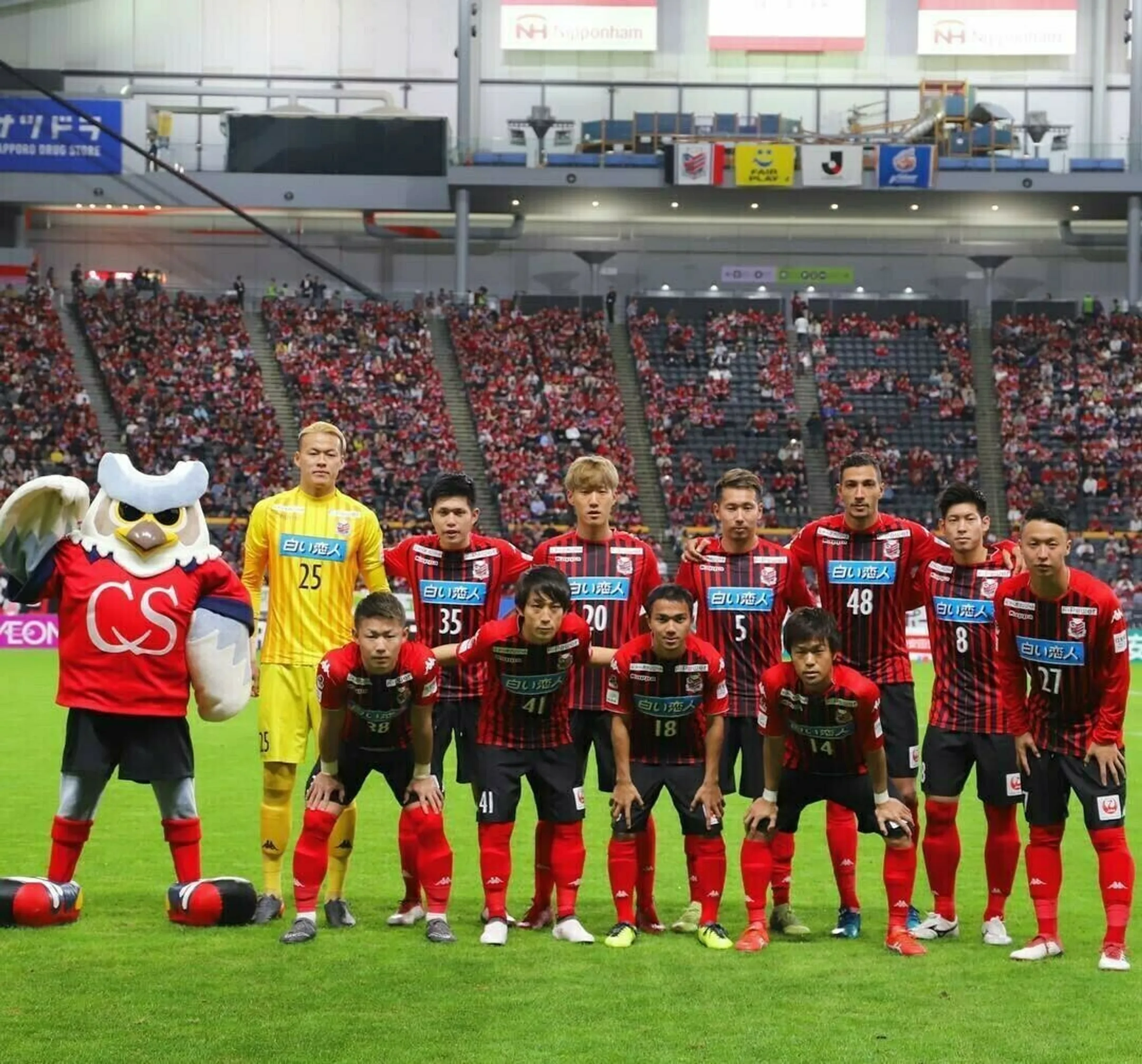
To me, finishing fourth [in 2018] was probably the biggest low since I've been at this club. Everyone thought coming fourth was a great achievement because we’d never had such a good season, but I don't look at it like that. We were winning 2-0 (in the last game of the 2018 season against Sanfrecce Hiroshima) and we were qualifying for the AFC Champions League.
We ended up drawing which meant we missed out so, for me, as much as Sapporo had never finished fourth, I care about what could have happened. We were in control, everything was in our hands, but then there were concentration lapses and mistakes and we lost it.
I definitely still want to play in the AFC Champions League and we have the opportunity to do it, so that’s where we have to get to.
Home in Hokkaido
I really like Sapporo. It’s a small city but it's always bubbly, the people are great, the fans are great and our stadium is fantastic. In a way the city is like Manchester, which is much smaller than London but still has the lights and you can go to bars, clubs and nice restaurants.
There are four seasons – you get the snow, the sun, the spring. There are parks too, so it’s just a really nice city and my family enjoy being here; I can’t speak highly enough of the place.
Sapporo is a real family club. The fan culture [in Japan] is great – very, very good. The big difference between England and Japan is that when fans go to watch a game in Japan, it’s kind of like a family day out.
You never hear any hostility and I’ve only heard booing a few times, and that was for the opposition. The fans are really passionate and the stadiums are amazing.
I have a really nice memory from when my son was born. At the next home game there was a massive banner that said: “Jay, wishing the new arrival the best. Hope the new beginning is full of happiness. Sapporo City is behind you 100%.”
That really moved me because I was not expecting it and it shows how thoughtful the fans are. I was a bit choked, a bit emotional and it made me and my family feel very happy.
The future
My age is just something it says on my passport, but I don’t feel it. I train every day and I’m still starting games. Obviously, Father Time will catch up with me eventually but, nowadays, playing until you’re 40 is happening more and more, especially if you avoid injuries which I’ve been fortunate enough to do so far.

There are a lot of players here in Japan that are older than me. You can still be effective as you get older, you just have to adapt, and that’s what the best players can do.
I don’t have any ambition to be a manager in England, or Europe, but if I was to be a manager it would be here in Japan. This is the only place I’d want to give back knowledge – nowhere else in the world.
I feel Japanese people are very fair and give you the opportunity to fail. In England, you can sign a three-year contract and be sacked after two months. I think you’d get at least a season here.
I’ve been fortunate enough to play under a lot of good managers and I’d like to give that knowledge back. If I was a manager here, I’d push my players like I push myself.
Japan: On and off the pitch
The J.League already rivals many European leagues. Obviously it’s not as good as the Premier League, or La Liga, or the Bundesliga, but it’s better than, for example, the Belgian league and I think teams here could rival a lot of teams in France.
If you’re talking about the league as a whole, there’s so many talented players and you’re seeing that nowadays with the number of Japanese players going to Europe.
Japan is a lovely country. It’s got great cities, the people are great, it’s very clean, very safe – it’s even got nice islands where you can go and have a beach holiday. So many people in the West say they want to go to Japan and I’d say, if you get the opportunity, you have to visit because it is an amazing place.
Photos: Hokkaido Consadole Sapporo, Jay Bothroyd
